
Historically, enterprises chose storage systems largely based upon how well they delivered on specific features. These included high availability, high capacity and performance, resilience and scalability, among many others.
While these features still matter, enterprises should increasingly seek out storage solutions that better address today’s modern requirements. These solutions take the form of modern storage platforms that come ready for deployment in hybrid cloud environments. These platforms offer AIOps capabilities, many more cybersecurity features, and better accommodate today’s consumption-based models.
Three Trends Driving the Demand for Storage Platforms
The demand for storage platforms has largely come about because of three trends occurring across enterprises of all sizes.
First, application developers and business stakeholders drive more technological choices. When I worked in a data center about twenty years ago, applications developers and business stakeholders rarely provided input into technology architecture or choices. Now they may dictate which environments these workloads run (cloud, on-premises, or hybrid) and influence technology choices.
Second, ransomware and bad actors were largely non-issues even as recently as ten years ago. Now, every part of the infrastructure must account for these threats by providing means to protect against and recover from them.
Third, enterprises continue to become more complex and require more automation. Enterprises cannot and should not expect to host ever more workloads across multiple environments and for them to remain easy to manage – at least manually. Further, enterprises may experience a cyber security event at any time.
To address these challenges enterprises must introduce AIOps into their environment to automate as many aspects of their IT management as possible.
Automation may encompass:
- Managing ongoing patches, fixes, and updates.
- Proactively adapting to dynamic changes in the environment.
- Identifying and responding appropriately to cyber security threats.
Effectively addressing these challenges demands that enterprises embrace an IT infrastructure designed to do so. Since storage represents such a critical piece of today’s enterprise IT environments, enterprises must select modern storage platforms – as opposed to storage systems – that address these concerns.
Characteristics of an Enterprise Storage Platform
As enterprises go to select an enterprise storage platform, these should look for a storage platform that possesses the following characteristics:
Characteristic #1: A Cloud-based management console.
Most if not all enterprises now operate IT environments that span multiple physical sites, often around the globe and with a presence in one or more public clouds. Effectively managing all these locations makes it a necessity for a storage platform to offer a cloud-based management console.
Providers will often deliver their cloud-based management console as a SaaS offering so they can manage and maintain it.
Functionality it should offer includes discovering and managing all storage instances, collecting and analyzing logs from them, and generating alerts as appropriate.
It should also possess modern features such as the ability to remediate low-severity issues, orchestrate advanced storage management tasks, and offer a chatbot for enterprises to easily interface with it.
Characteristic #2: Robust SDS
Enterprises often want to have the same storage management experience no matter where their storage resides. Doing so requires the storage platform offer a robust software-defined storage (SDS) feature.
By robust, I mean the SDS feature should offer the same software features available on the provider’s hardware storage system. This gives them flexibility, and really the power, to manage storage across both public clouds and on-premises storage systems in the same manner.
Characteristic #3: SLA-Driven Data Services
Modern storage platforms must reflect a services-oriented approach – as opposed to an infrastructure-oriented approach – to deliver storage services.
In practical terms, this means that enterprises can provide specific workload policies and thresholds to the storage platforms. The storage platform then uses these to monitor and manage the workloads its hosts and to take the appropriate actions as the situation warrants.
In so doing, the storage platform assumes the responsibility for dynamically performing many of the common tasks that storage admins must try to manually perform now.
This reactive process largely comes to an end with the storage platform taking actions before an issue escalates and negatively impacts either the specific workload or the broader production environment.
FlashEver: The Huawei Data Storage Platform Services
In the last few years DCIG has noted that many storage providers have transitioned from providing storage systems to delivering storage platforms. The Huawei Data Storage Platform Services solution represents a recent surprise entrant into this market, at least from DCIG’s perspective.
DCIG has for multiple years recognized the Huawei OceanStor family as one of the leading enterprise storage systems in the world. Now, Huawei has made its OceanStor platform available as an SDS offering. Enterprise may deploy OceanStor SDS in multiple clouds, to include Huawei Cloud, AWS, Google Cloud Platform, and Microsoft Azure.
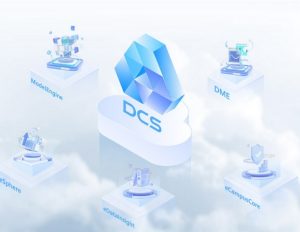
Just as notably, enterprises may manage all Huawei OceanStor instances though Huawei’s cloud-based Data Management Engine (DME) SaaS application.
Through this cloud-based console, enterprises can manage all Huawei storage instances with full storage management feature functionality. Further, it comes ready to identify and remediate low-severity L1 issues as well as provide the AIOps functionality that enterprises also need to simplify their increasingly complex IT environment.
The Future for Storage Platforms is Now
More enterprises recognize that storage systems must evolve and mature to become storage platforms to meet the needs of the modern yet complex IT environments. FlashEver, Huawei Data Storage Platform Services, gives enterprises access to a comprehensive storage solution.
It still offers the same high levels of capacity, performance, resilience, and scalability to which they have grown accustomed. However, it more importantly offers the new functionality that provides a bridge for enterprises from yesterday’s storage systems to today’s storage platforms.
KEEP UP-TO-DATE WITH DCIG
To be notified of new DCIG articles, reports, and webinars, sign up for DCIG’s free weekly Newsletter.
To learn about DCIG’s future research and publications, see the DCIG Editorial Calendar.
Technology providers interested in licensing DCIG TOP 5 reports or having DCIG produce custom reports on their behalf, please contact DCIG for more information.
Note: Huawei is a client of DCIG.