GPBAs: 3 Technology Trends Reshaping Cyber Resilient Hybrid NAS Backup Appliances
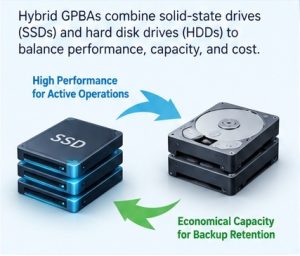
Explore three technology trends reshaping Cyber Resilient Hybrid NAS GPBAs: hybrid storage architectures, immutability technologies, and air-gapping.

Explore three technology trends reshaping Cyber Resilient Hybrid NAS GPBAs: hybrid storage architectures, immutability technologies, and air-gapping.

Legitimate AI agents have now emerged as a serious contender to supplant human error as the largest threat. This stems from AI agents operating with authenticated user credentials to change or delete data at machine speed. To protect against this, organizations must identify which AI agents exist, what they can access, and who can invoke them. HYCU aiR Graph helps organizations gain this visibility while connecting agent governance with SaaS data protection.

Organizations considering VMware alternatives may initially view the task as a hypervisor replacement exercise. Yet virtualization represents only one component of the infrastructure they may need to replace in order to regain infrastructure control.

DevOps Backup must evolve as AI agents turn good employees into unintended bad actors. Learn how HYCU protects DevOps data from AI-driven mistakes.

DCIG has started researching SDS object storage solutions available in the market today. The outcome will be a series of DCIG TOP 5 SDS Object Storage Solution Reports covering the top-ranked solutions. While still early, these six insights stand out among the twenty products researched thus far.

In finalizing DCIG’s TOP 5 research into general-purpose NAS appliances used as backup targets, I made a notable observation. I found few articles that provide guidance on which file protocol that organizations should use for backups. That omission may seem trivial.
However, organizations continually seek ways to accelerate backups and recoveries. Something as simple as choosing NFS over SMB, or vice versa, could potentially improve performance. Since all network attached storage (NAS) appliances positioned as backup targets support both protocols, why not select the better one?

Organizations increasingly evaluate HCI OSes as alternatives to traditional virtualization stacks when modernizing their IT environments. In doing so, they typically evaluate each HCI OS’s hypervisor, storage, networking, management, and licensing features. However, this approach may overlook another consideration: how certain HCI OSes require organizations to purchase and maintain specific server hardware. To avoid this, organizations should evaluate three characteristics that indicate how much hardware flexibility an HCI OS provides.

Organizations of all sizes and in all verticals increasingly depend upon SaaS applications to have continuous data access in their day-to-day business operations. However, this SaaS model comes with a catch. Using SaaS applications and storing data in the cloud transfers responsibility for that underlying infrastructure to SaaS and cloud providers. This model works well until the SaaS application, the cloud storage it uses, or the connection between them becomes unavailable. HYCU R-Serve for iManage begins to address this emerging issue of continuous data access for one SaaS application, iManage. Rather than restoring data, R-Serve offers continuous data access to iManage data that HYCU R-Cloud already protects.

Organizations have long used network attached storage (NAS) appliances as backup targets because they provide familiar, flexible, and accessible storage. However, ransomware and rapid backup growth now force organizations to demand more from the NAS systems protecting their backup data. These requirements increasingly include immutability, cyber resilience, high-speed recovery, greater capacity, and tighter backup software integration. To help organizations identify these systems, DCIG has begun researching cyber resilient NAS appliances that providers specifically position for backup

“Private Cloud Operating System”, or PCOS, has emerged as the latest term for a hyperconverged infrastructure (HCI) operating system (OS). Yet, for better or worse, organizations will find at least fourteen terms that classify today’s available HCI OSes. As such, organizations may shrug off PCOS as more HCI noise with it no different than any other HCI OS. While admittedly easy, this does not represent the right time to shrug off the importance of distinguishing between these 14 different HCI OSes. The entire HCI market remains in flux as organizations consider their next moves with HCI solutions in this post-VMware world.