
Enterprise backup storage requirements continue to evolve as organizations confront ransomware threats, expanding data retention requirements, and rising infrastructure costs. Selecting a general-purpose backup appliance (GPBA) now involves more than evaluating storage capacity, backup throughput, and recovery performance. Organizations must also assess if these appliances can effectively protect backup data against increasingly sophisticated cyberattacks.
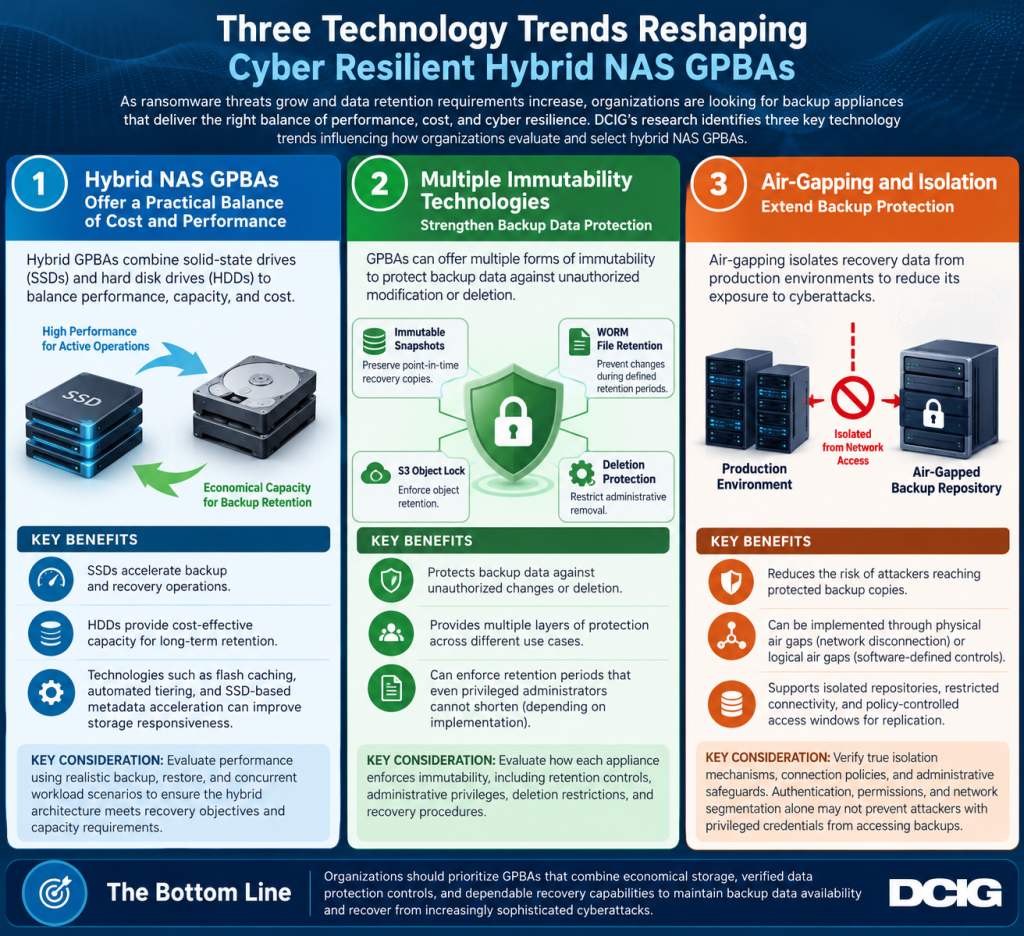
DCIG’s research into cyber resilient GPBAs identifies three technology trends influencing enterprise backup storage decisions. These include hybrid (HDD and SSD) NAS architecture, using multiple immutability technologies, and the adoption of air-gapping and isolation capabilities.
Together, these trends reflect a shift in how organizations evaluate backup storage. Backup appliances must deliver economical capacity and predictable performance while preserving recoverable copies of data when production environments or administrative credentials become compromised.
Trend #1: Hybrid NAS GPBAs Offer a Practical Balance of Cost and Performance
Organizations face growing pressure to expand backup storage capacity without significantly increasing infrastructure costs. At the same time, demanding recovery objectives require storage systems that can quickly ingest and restore large volumes of data.
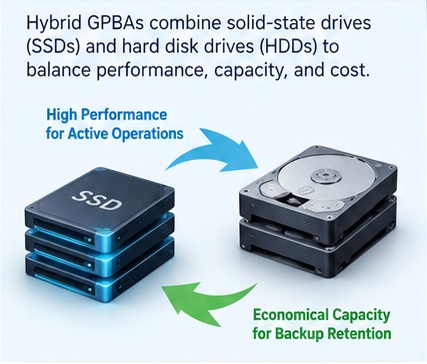 Hybrid NAS GPBAs address these competing requirements by combining solid-state drives (SSDs) and hard disk drives (HDDs). SSDs accelerate selected storage operations, while HDDs provide comparatively economical capacity for retaining backup data.
This architectural approach becomes increasingly relevant as the cost and availability of flash storage remain uncertain. Micron’s fiscal fourth-quarter 2026 earnings presentation projected constrained DRAM and NAND flash supply-demand conditions through 2027 and 2028. A separate third-party industry firm forecast continued price increases affecting enterprise memory and flash storage products.
These market conditions may make all-flash backup storage more expensive to acquire and expand. Consequently, organizations should evaluate whether their backup and recovery workloads demand all-flash performance. If not, NAS GPBAs with a hybrid architecture may satisfy their requirements at a lower cost.
Hybrid GPBAs employ several technologies to improve performance, including flash caching, automated data tiering, and SSD-based metadata acceleration. These technologies can reduce HDD-related bottlenecks and improve storage responsiveness during backup and recovery operations.
However, organizations should not assume that every hybrid GPBA delivers comparable performance. The effectiveness of its SSD resources depends on the appliance’s architecture, workload characteristics, and implementation of acceleration technologies.
Organizations should evaluate hybrid GPBAs using realistic backup ingest, restore, and concurrent workload scenarios. These tests can help determine whether hybrid architecture satisfies recovery objectives while economically providing needed capacity for long-term backup retention.
Trend #2: Multiple Immutability Technologies Strengthen Backup Data Protection
Immutability has become an important capability in enterprise backup storage. Organizations increasingly recognize that maintaining multiple backup copies provides limited protection if attackers can modify or delete those copies.
GPBAs may offer several technologies to protect backup data against unauthorized changes. These include immutable snapshots, write-once-read-many (WORM) file retention, S3 Object Lock, and administrative deletion protection. Although these technologies share similar objectives, they differ significantly in how they enforce protection.
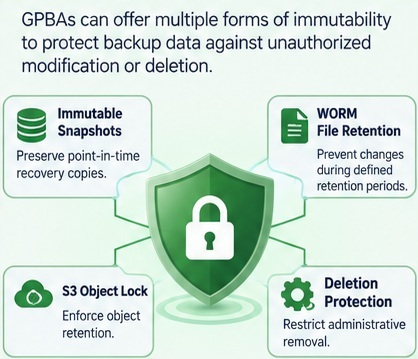
Immutable snapshots preserve point-in-time recovery copies. WORM retention prevents protected files from being modified or deleted during defined retention periods. S3 Object Lock can enforce object retention, while deletion protection introduces additional controls over administrative removal.
However, the presence of these features does not necessarily establish equivalent levels of cyber resilience.
Some implementations enforce retention periods that privileged administrators cannot shorten. Others permit authorized administrators to modify retention policies, remove protections, or delete backup data. These distinctions become particularly important should ransomware attackers obtain administrative credentials.
An attacker possessing sufficient privileges may bypass protections that rely primarily on configurable administrative policies. Conversely, immutability technologies that enforce retention independently of compromised administrative accounts can provide stronger safeguards. However, these stronger safeguards offer less flexibility for organizations to delete aging or unneeded backups.
Organizations should therefore examine how each GPBA implements and enforces its immutability features. Important considerations include retention enforcement, administrator privileges, policy modification restrictions, and protected-copy deletion procedures.
Organizations should also determine whether different immutability technologies protect the same backup copies or operate independently across storage repositories.
As such, organizations no longer need to ask whether a GPBA supports immutability. Immutability has become a given. Rather, organizations must ask whether its implementation prevents attackers with compromised administrative credentials from modifying or deleting protected backup copies.
Trend #3: Air-Gapping and Isolation Add Another Layer of Cyber Resilience
Immutability protects backup data against modification and deletion. Air-gapping addresses another important risk: an attacker’s ability to reach protected backup copies.
Air-gapping isolates recovery data from production infrastructure to reduce its exposure to cyberattacks. GPBAs may implement air gaps in up to two possible ways. They may offer physical air gaps that disconnect storage from networks. Alternatively, they may implement logical air gaps that restrict connectivity through software-defined mechanisms. Both approaches seek to limit an attacker’s ability to compromise production systems and protected backup repositories during the same incident.
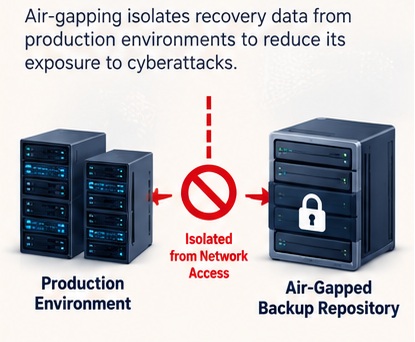 GPBAs may support isolation through dedicated repositories, restricted network connectivity, policy-controlled access windows, or replication to separate backup targets. Some architectures permit connectivity only during authorized replication periods, reducing the time that protected copies remain accessible.
These capabilities can strengthen recovery strategies by introducing additional barriers between compromised production environments and backup data. However, organizations must distinguish actual isolation from conventional security controls.
Authentication, access permissions, and network segmentation provide important protection. Nevertheless, these controls alone may not prevent attackers possessing privileged credentials from reaching or deleting backup data. Similarly, a logically isolated repository may remain vulnerable if compromised administrators can disable its isolation policies or establish unauthorized connections.
Organizations should examine the mechanisms each GPBA uses to establish and maintain isolation. They should determine who can modify connectivity policies, how replication windows operate, and whether administrative credentials can override isolation safeguards.
They should also validate procedures for reconnecting isolated repositories and restoring data following a ransomware incident. Effective air-gapping requires more than restricting network access. Organizations must verify that isolation remains enforceable even when attackers compromise production systems or administrative accounts.
Cyber Resilient GPBA Selection Requires Evaluating More Than Individual Features
These three trends demonstrate how backup storage selection increasingly involves balancing infrastructure economics with cyber resilience requirements.
Hybrid NAS architectures can help organizations control storage costs while maintaining backup and recovery performance. Multiple immutability technologies provide complementary safeguards against unauthorized changes. Air-gapping and isolation further reduce the likelihood that attackers can compromise protected recovery copies.
However, organizations should avoid evaluating these capabilities independently or relying exclusively on published feature lists.
Instead, they should assess how a GPBA’s architecture, immutability controls, and isolation mechanisms work together under realistic operating conditions. This evaluation should include performance testing, administrative privilege reviews, and validation of recovery procedures following simulated cyberattacks.
DCIG’s forthcoming TOP 5 and TOP 3 cyber resilient GPBAs reports helps organizations identify and compare appliances offering these capabilities. They will also highlight architectural and implementation differences that may influence their suitability for enterprise backup environments.
Ultimately, organizations should prioritize GPBAs that combine economical storage, verified data protection controls, and dependable recovery capabilities. These characteristics provide a stronger foundation for maintaining backup data availability and recovering from increasingly sophisticated cyberattacks.
KEEP UP TO DATE WITH DCIG
To be notified of new DCIG articles, reports, and webinars, sign up for DCIG’s free weekly Newsletter.
To learn about DCIG’s future research and publications, see the DCIG Editorial Calendar.
Technology providers interested in licensing DCIG TOP 5 reports or having DCIG produce custom reports on their behalf, please contact DCIG for more information.