
Any organization that received a quote for server hardware in Q4 2025 probably experienced a bit of sticker shock. Then, if it did not act and requested a second server hardware quote in Q1 2026, it received another shock. The quote likely increased by 15 percent, and perhaps more, depending on the server hardware configuration.
Broadcom already had organizations evaluating alternative hypervisors (and perhaps reeling) after again updating its VMware software licensing. Now enterprises must deal with yet another component of their core IT infrastructure increasing in cost. These increased server hardware costs have reframed the hypervisor conversation into one that also becomes a hardware lifecycle decision.
Increased Hardware Prices Not a Blip on the Radar Screen
Whether an individual organization has internally decided to embrace artificial intelligence (AI) makes little difference. Hyperscalers have fully embraced AI and that makes all the difference.
One analysis put the 2025 capital expenditure (CapEx) of five hyperscalers (Amazon, Google, Meta, Microsoft, and Oracle) at about $365 billion. That increases to $630 billion in 2026 for these five companies with total global AI CapEx estimated at $8.9 trillion from 2026-2030. They now place orders for dynamic random-access memory (DRAM) and solid-state drives (SSDs) that go years into the future.
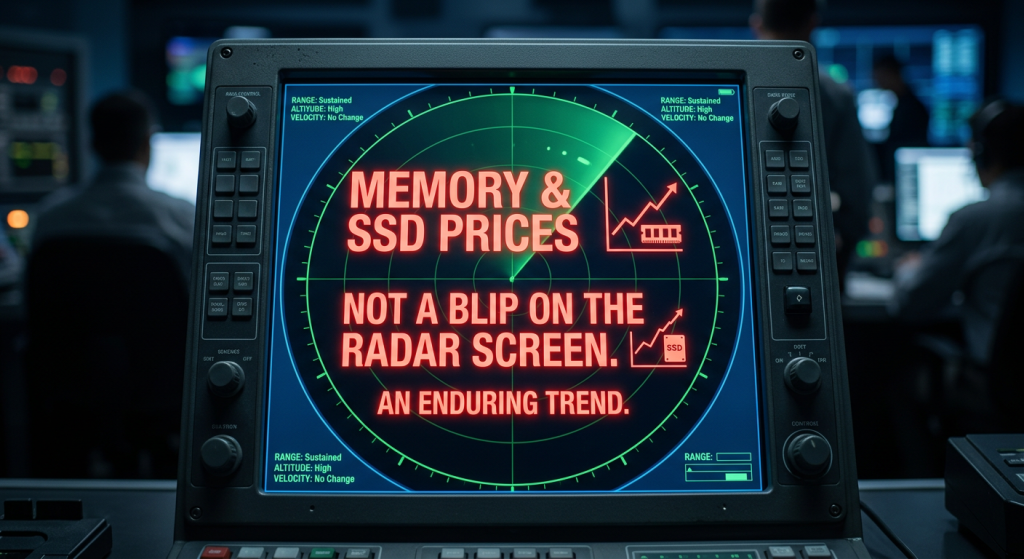
These orders have created a shortage of DRAM and SSDs, which contribute significantly to increased server hardware prices. The price of DRAM alone has increased by up to 90 percent quarter-over-quarter (QoQ) while SSDs have experienced similar increases in cost.
In short, organizations should not expect the server hardware price increase to represent just a blip on the radar screen. Rather, the increased pricing represents the new normal for the foreseeable future, perhaps continuing until 2030.
Further, the more memory or SSDs that a server includes, the more that server costs. For instance, the price of an “average” server may rise by up to 30 percent year-over-year (YoY). Organizations should expect even larger percentage price increases for servers with performance-intensive requirements or configured for AI workloads.
Server Hardware Cost Impacting Hypervisor Choice
These increased server hardware costs specifically come into play as organizations consider acquiring a VMware alternative. Many already had plans to acquire a VMware alternative or perhaps even keep some workloads on VMware longer. That may no longer be possible due to the double whammy of higher software licensing fees and server hardware costs.
Instead, they may need to consider repurposing their existing hardware to host the new hypervisor. Alternatively, they may need to examine a hypervisor that requires server hardware with lower memory and SSD requirements.

In either case, organizations may no longer select a hypervisor without also considering the cost of the underlying server hardware. They will want to look at the server hardware costs from two vantage points. First, they should consider hardware required to host the hypervisor. Second, they should also consider how long (i.e., how many years) they can host the hypervisor on that hardware.
Staying current with a hypervisor may require that an organization refresh its new server hardware in three, four, or five years. Considering the forecasted extended shortage of DRAM and SSDs and corresponding high prices, can an organization afford its next hardware refresh?
Supply Constraints and Higher Prices the New Reality
Organizations have become somewhat accustomed to server hardware prices coming down YoY. Or if the prices do not come down, per se, they get more memory and SSD capacity for the same price.
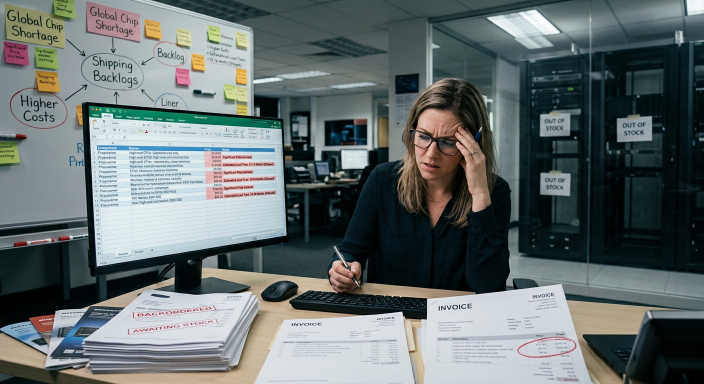
This current trend of increasing costs for memory and SSD capacity breaks this historical trend in two ways.
- First, organizations should prepare to pay more for the same amount of memory or SSD capacity YoY for the next few years. Organizations should not expect a one-time price increase and then for these prices to drop in the coming months. There is no extra capacity coming online in the near term (12-18 months) to meet the existing demand. Further, it takes time for DRAM and SSD providers to build new facilities. While they plan to build more factories, they remain reluctant to overbuild. This reduces the likelihood that prices will go down even after the next 18 months pass with shortages forecast to persist until 2030.
- Second, if they need more memory or SSD capacity, they should expect to pay a lot more. AI workloads rely on high-performance GPUs and high-capacity and high-performance memory and SSDs to run optimally. As a result, hyperscalers and others with AI workloads will pay a premium for high-capacity and high-performing memory and SSDs. Organizations will already find 64GB and 128GB High Bandwidth Memory (HBM) cost a premium and in short supply. Further aggravating the situation, if they wait to buy, the HBM may go up in price, become unavailable, or both.
These higher prices and supply constraints impact organizations expecting to do server refreshes as part of their new hypervisor implementation. They may find themselves lacking the budget to buy all their server hardware at one time. Even if they have the budget, they may need to consider buying servers with different hardware configurations. This may not work if the hypervisor does not support the hardware configuration.
Even hard disk drives (HDDS) have re-entered the conversation with organizations once again considering using HDDs in lieu of SSDs. However, organizations may also find HDDs subject to higher prices and limited availability.
Server Hardware Flexibility and Lifespan Now Critical Part of a Hypervisor Decision
Organizations cannot treat buying server hardware as an afterthought when deploying a hypervisor. Server hardware DRAM and SSD components have increased significantly in price and will continue doing so.
Further, organizations can no longer assume ready availability of either of these two components. If anything, organizations should both increase their hardware budgets and then move fast when buying. Waiting to buy may only result in higher prices or the server hardware they need becoming unavailable.
As this scenario plays out, organizations need to select a hypervisor that gives them the flexibility to use available server hardware. Using available server hardware may extend to repurposing and extending the life of existing server hardware. Alternatively, organizations may end up acquiring servers and deploying them in the same cluster even if they possess different hardware components. This represents the new reality that organizations face in today’s world of rising prices and component shortages.
A VMware alternative hypervisor such as Verge.IO with its VergeOS cloud OS platform addresses these new concerns. Using VergeOS, organizations may mix and match different generations of server hardware (old and new) in the same cluster. Unlike other hypervisors, it utilizes a single codebase that incurs minimal overhead permitting production workloads to continue running as expected.
Organizations need more flexibility to respond to today’s twin challenges of rising server hardware costs and uncertain availability. Verge.IO VergeOS offers them the core hypervisor features, to include cloud-native capabilities, that they seek in a VMware alternative. Just as importantly, organizations may host VergeOS on most server hardware to give them certainty in today’s uncertain server market.
KEEP UP TO DATE WITH DCIG
To be notified of new DCIG articles, reports, and webinars, sign up for DCIG’s free weekly Newsletter.
To learn about DCIG’s future research and publications, see the DCIG Editorial Calendar.
Technology providers interested in licensing DCIG TOP 5 reports or having DCIG produce custom reports on their behalf, please contact DCIG for more information.
Editor’s note: Verge.IO is a client of DCIG.